
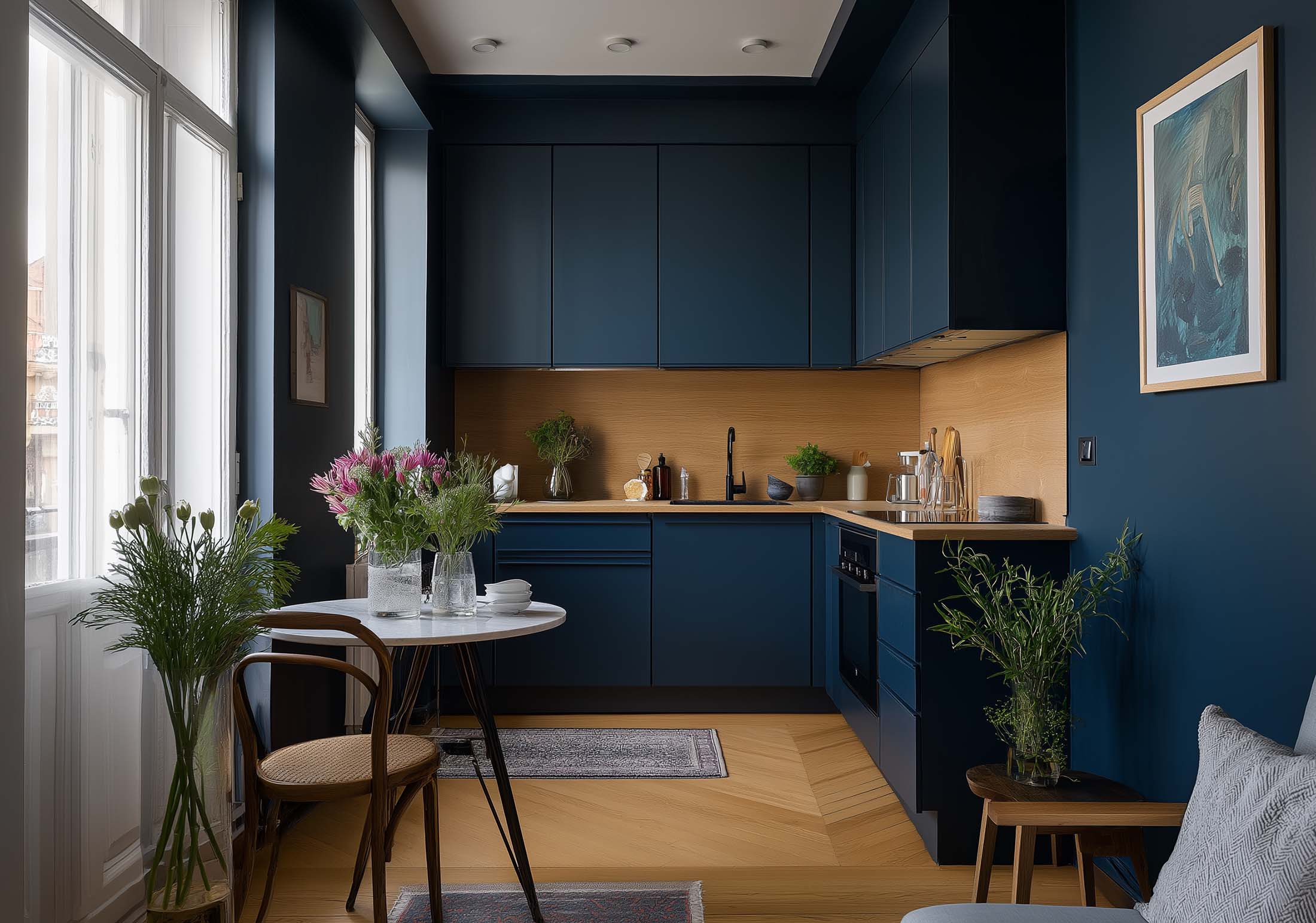
Designing a small kitchen is challenging enough as it is—and then to do it in dark blue, too? Many people shy away from using dark colors in small spaces. But a dark blue can actually lend a mini-kitchen a surprising amount of depth, elegance, and tranquility—if you keep a few things in mind.
In this article, I’ll show you how to design a small kitchen in dark blue, which colors and materials go well with it, and what tricks you can use to make the space feel harmonious and cozy.
1. Why Dark Blue Works in Small Kitchens
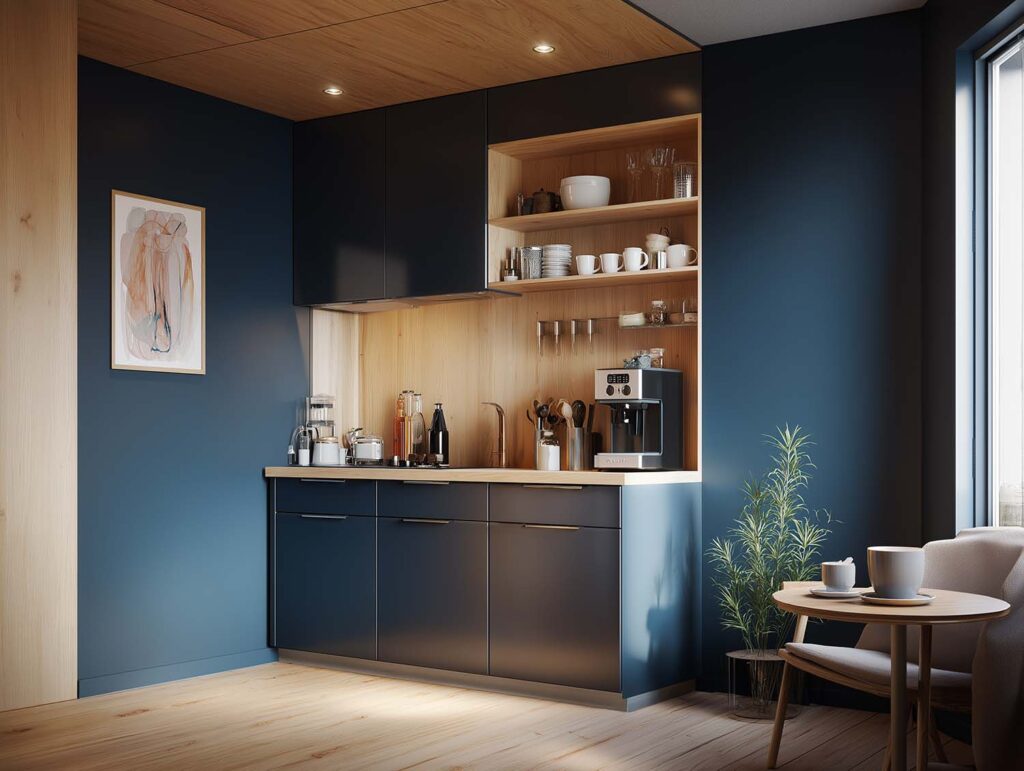
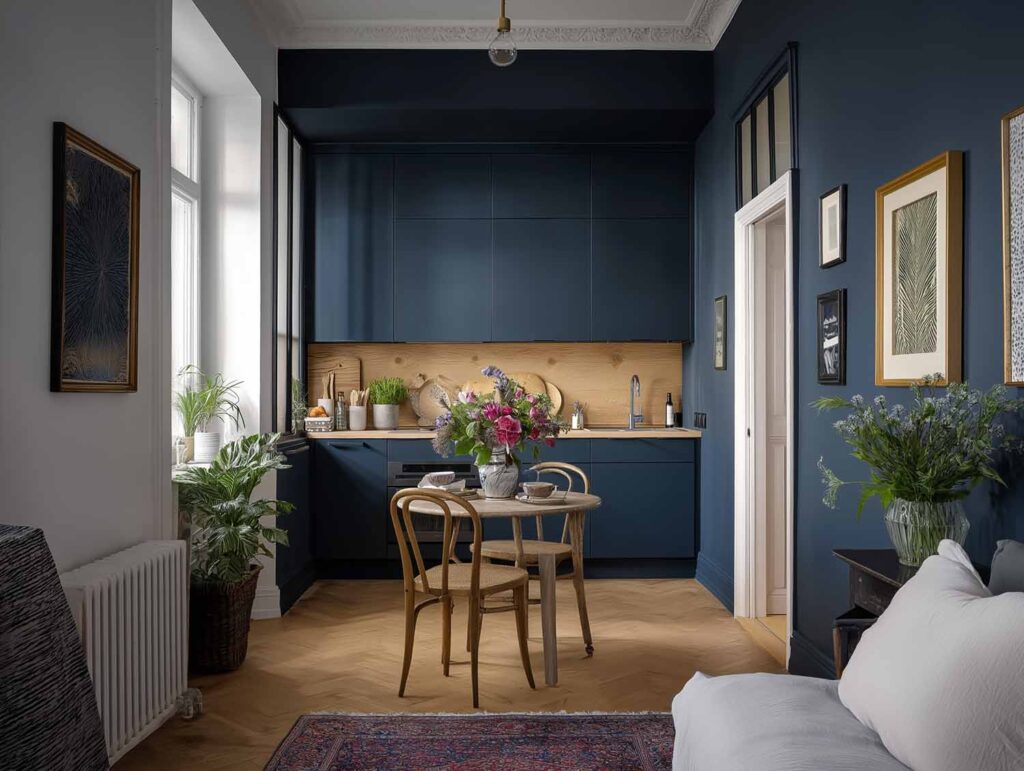
Dark blue is often associated with elegance, clarity, and depth. It evokes images of the night sky, the sea, or the distant horizon, creating a calm, grounded atmosphere. In small kitchens, dark blue can look surprisingly sophisticated because it visually calms the space and adds structure.
The secret lies in using contrasts and light effectively. While dark colors make spaces appear smaller, they also give a neat and high-quality look. A kitchen in dark blue looks more organized than one in many different light shades—and that’s worth its weight in gold, especially in a small space.
2. The Right Shade: Which shade of dark blue goes well with your kitchen?
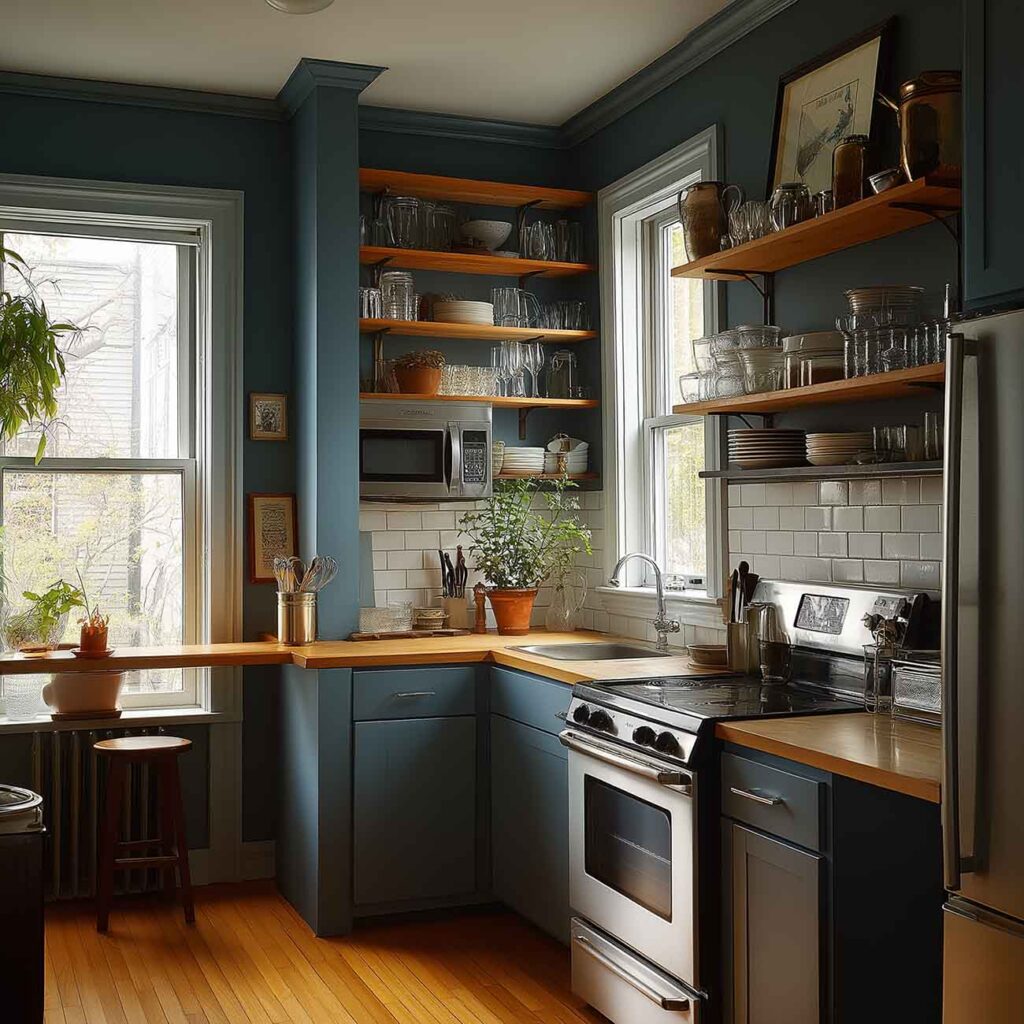
Not all blues are the same. In small kitchens, you should opt for a shade with warm depth. Cold, very dark blues with a hint of black can quickly appear harsh, while muted or slightly grayish blues seem calmer and more modern.
Popular variations include, for example:
- Navy Blue: classic, elegant, goes well with brass and white.
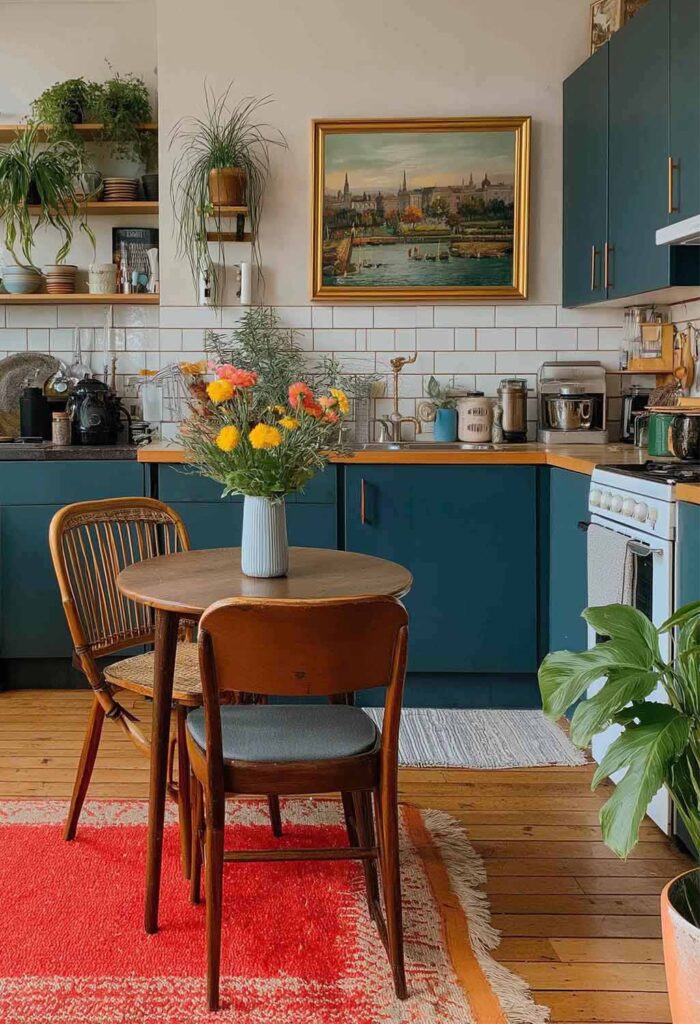
- Petrol blue: slightly warmer, looks more vibrant, and complements wood.
- Midnight blue: almost black, ideal for minimalist rooms with light-colored floors.
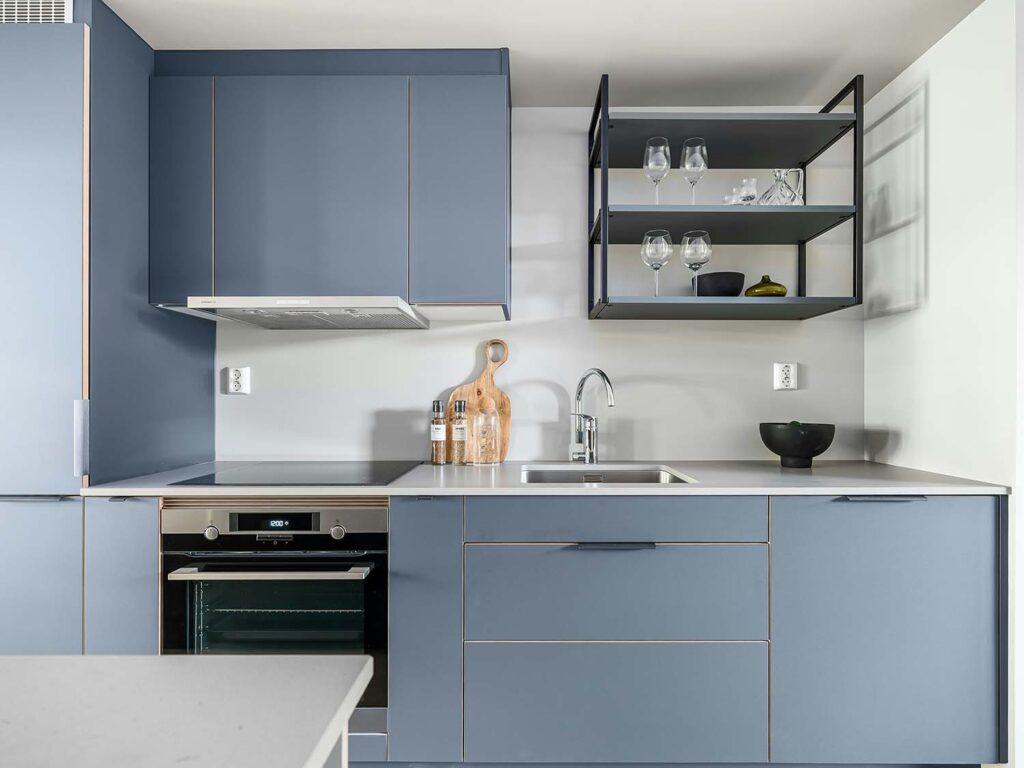
- Dove blue: lighter, with a grayish tint, makes the room feel more open.
If you’re unsure, just hold a color swatch up to your kitchen cabinet or wall. That way, you’ll immediately see how the blue looks in your lighting.
3. How to Style Dark Blue: These Colors Go Perfectly With It
To keep dark blue from becoming too overpowering in small kitchens, you need light contrasts. They bring a sense of lightness to the space and allow the dark surfaces to stand out.
Combination Ideas:
- White: classic and fresh. Ideal for walls, tiles, or countertops.
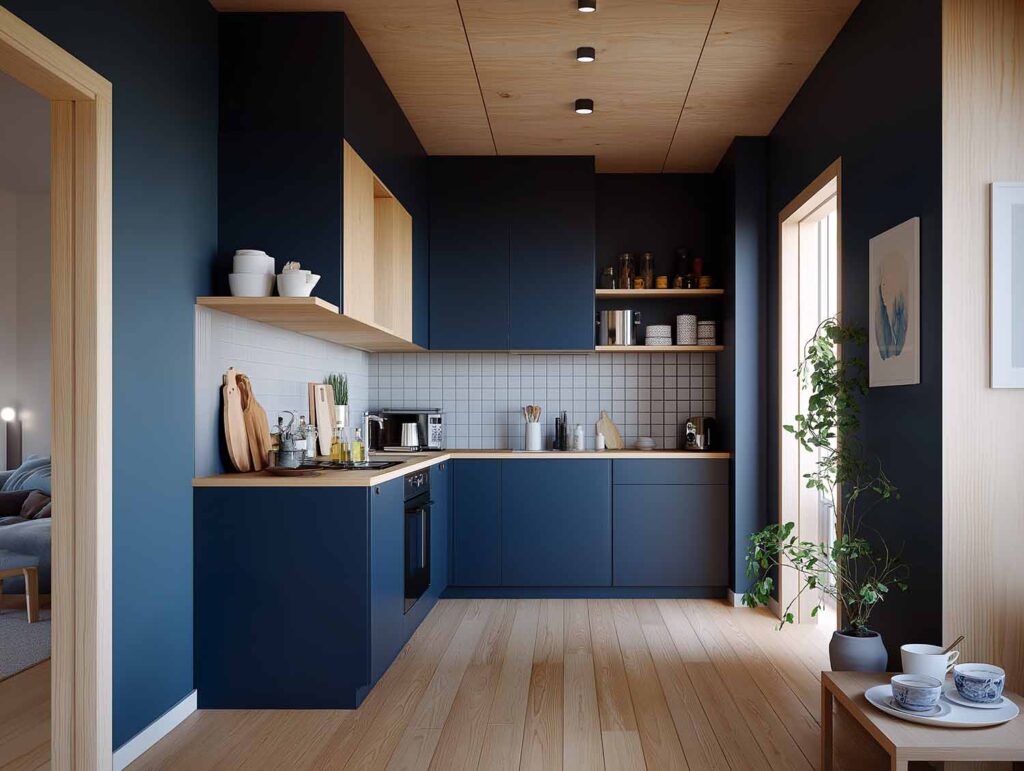
- Wood: adds warmth and a natural touch to dark blue. Oak or ash are particularly beautiful choices.
- Brass or gold: adds a touch of luxury and elegance. Perfect for handles, faucets, or lamps.
- Gray or concrete-look: for a modern, urban look.
- Shades of sand and beige: create balance and softness.
Here’s a tip: If you choose dark blue, stick to a maximum of two or three other colors in the rest of the room. This will keep the overall look calm and harmonious.
4. Lighting Is Everything: How to Keep Dark Blue From Overwhelming the Room
In small rooms, lighting is the key factor in making dark colors work. It’s best to use a combination of natural light, good general lighting, and strategic accents.
- Natural light: If you have a window, avoid using heavy curtains. Keep the window area clear so that as much light as possible can come in.
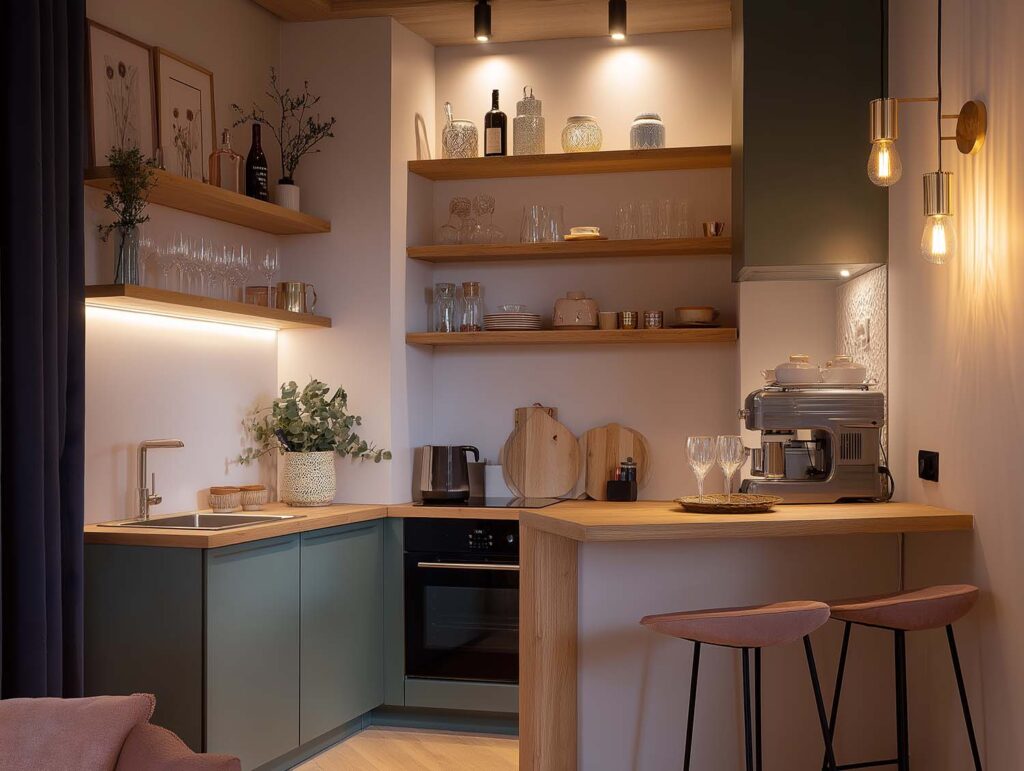
- Task lighting: Under-cabinet lights or LED strips installed beneath the wall cabinets provide brightness for the countertop.
- Accent lighting: A pendant light above the countertop or dining bar draws the eye and creates focal points.
- Color temperature: Warm white light (2700–3000 Kelvin) gently accentuates the dark blue and creates a cozier atmosphere than cool light.
If your kitchen doesn’t get any natural light at all, you can use light-colored surfaces —such as glass backsplashes or white tiles—to reflect light in specific areas.
5. Dark Blue as an Accent Color: Sometimes Less Is More
You don’t have to paint or replace all the cabinet fronts with dark blue right away. Especially in small kitchens, using the color strategically can be all it takes to create a striking effect.
- Upper cabinets in dark blue, lower cabinets in light gray or white: This creates an airy, modern look.
- Just the kitchen island or countertop in dark blue: Ideal if you have an open-concept living space.
- Walls or backsplash in dark blue: Looks great with white kitchen cabinets.
- Individual elements such as shelves or handles: For a subtle yet harmonious color scheme.
This keeps the room bright while still giving it depth and character.
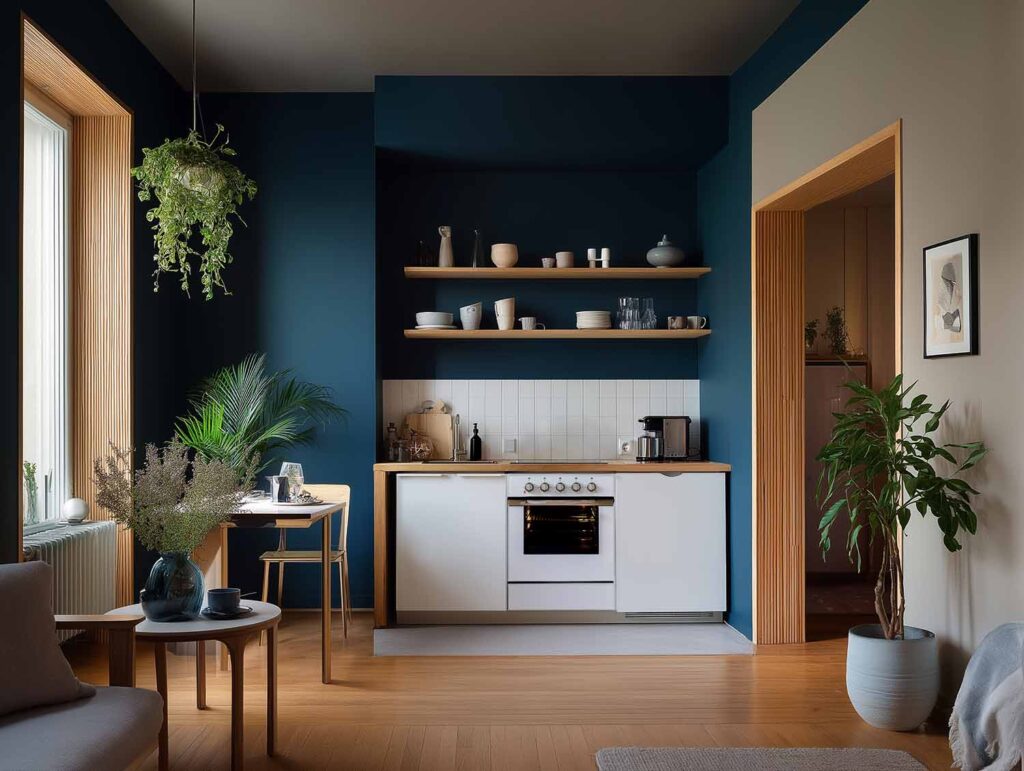
6. Fabrics that look especially good in dark blue
The choice of materials determines whether your small kitchen feels cozy or sterile. Dark blue pairs especially well with natural, matte surfaces:
- Wood: adds warmth and contrast.
- Matte finish or velvet-like look: it looks elegant and creates a calming atmosphere in the room.
- Stone or marble: for a touch of luxury on countertops or backsplashes.
- Metal in gold, copper, or black: used as an accent on light fixtures or handles.
- Rattan, raffia, linen: perfect for creating a cozy atmosphere in open-concept kitchens.
A mix of matte and slightly glossy surfaces creates depth and dynamism without appearing cluttered.
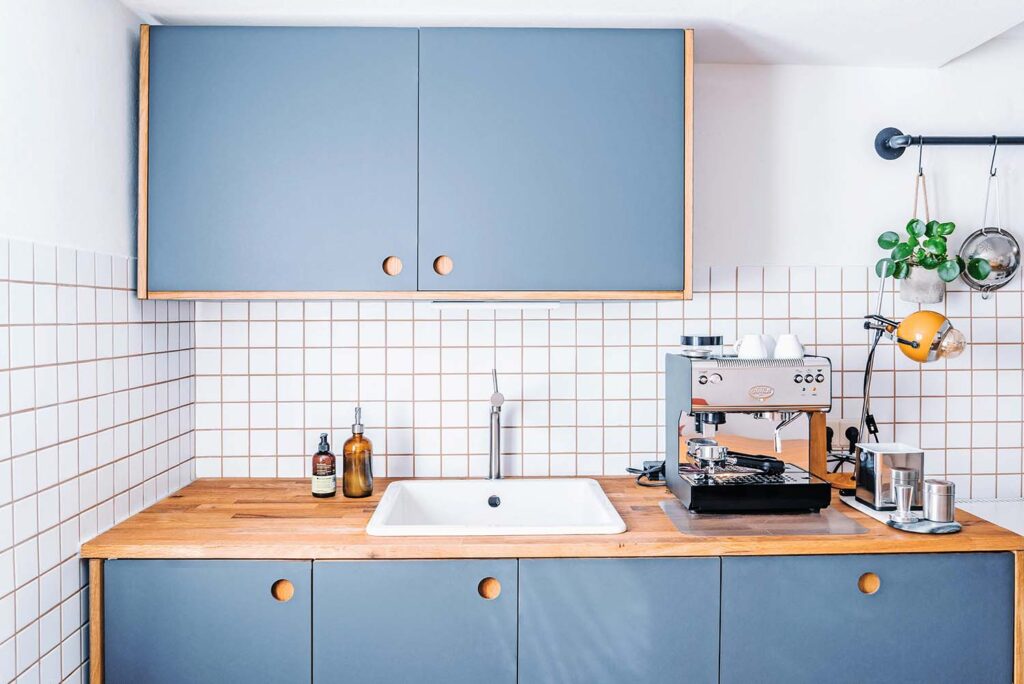
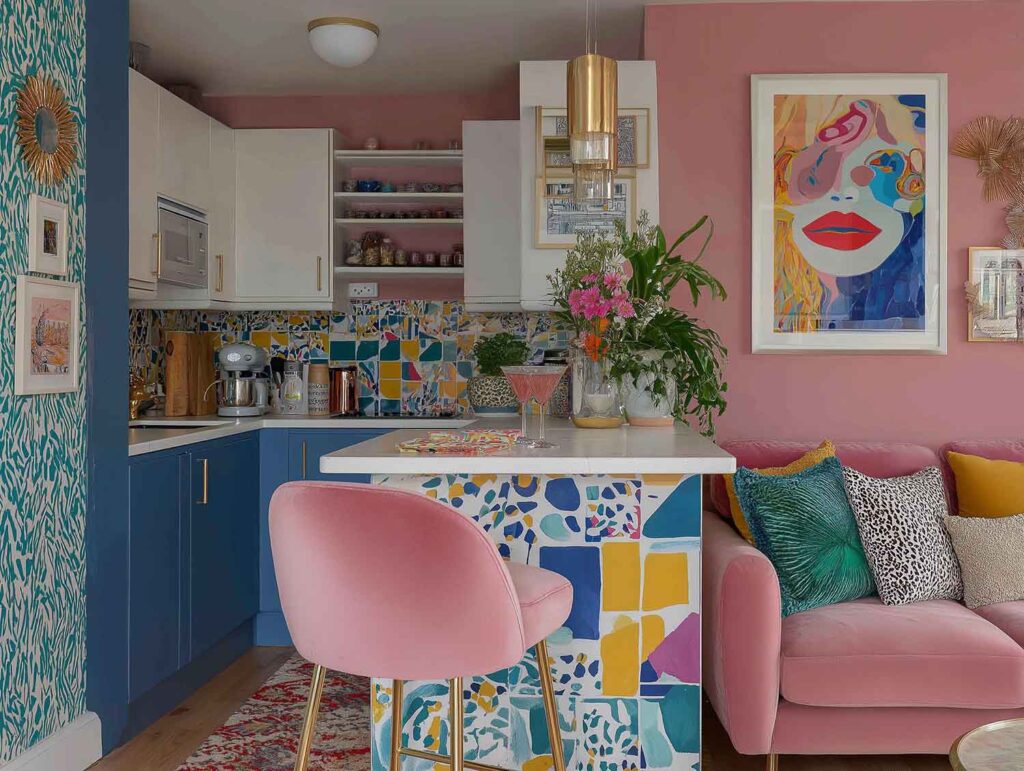
7. Open Kitchen in Dark Blue: Visually Blurring the Boundaries
In city apartments in particular, the kitchen is often part of the living area. Dark blue can help visually separate the kitchen without hiding it.
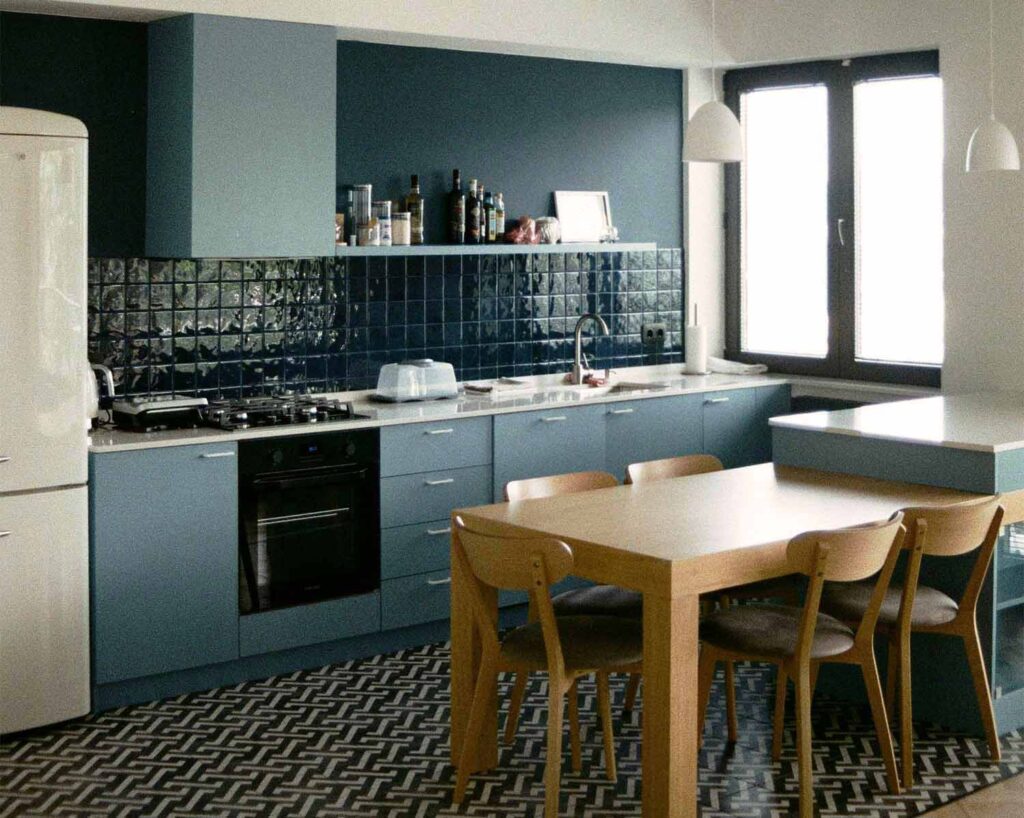
For example, if you paint the kitchenette dark blue and the living area a light beige, you’ll create a harmonious transition. An open shelf, a rug, or different lighting can further define the spaces.
Conversely, you can also use materials that are consistent throughout the space—such as the same wood countertop as on the living room shelf. This makes the room appear larger and more open.
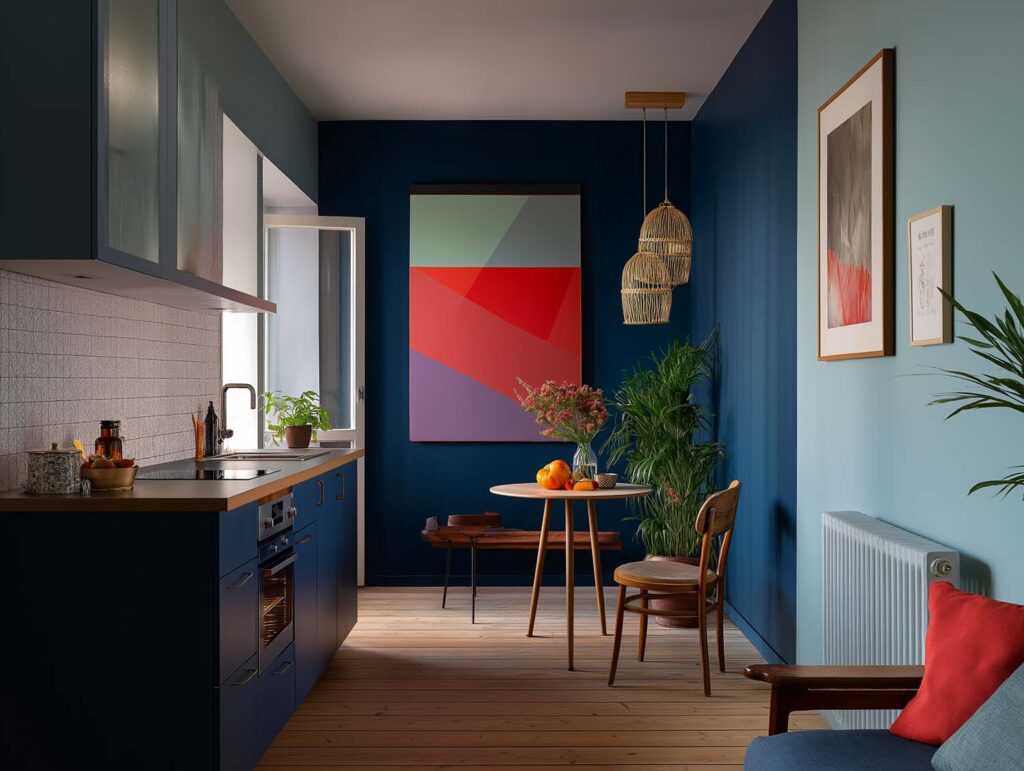
8. Wall design: Dark blue with texture
If you’re painting walls dark blue, pay attention to the texture. A matte finish looks calmer, while a satin finish reflects more light.
In particularly small rooms, a half-height wall design is also an option: blue at the bottom and a light, neutral shade at the top. This visually elongates the walls and makes the kitchen appear taller.
Wallpaper with a subtle texture or geometric patterns in tone-on-tone shades of blue can also look interesting, as long as they aren’t too overpowering.
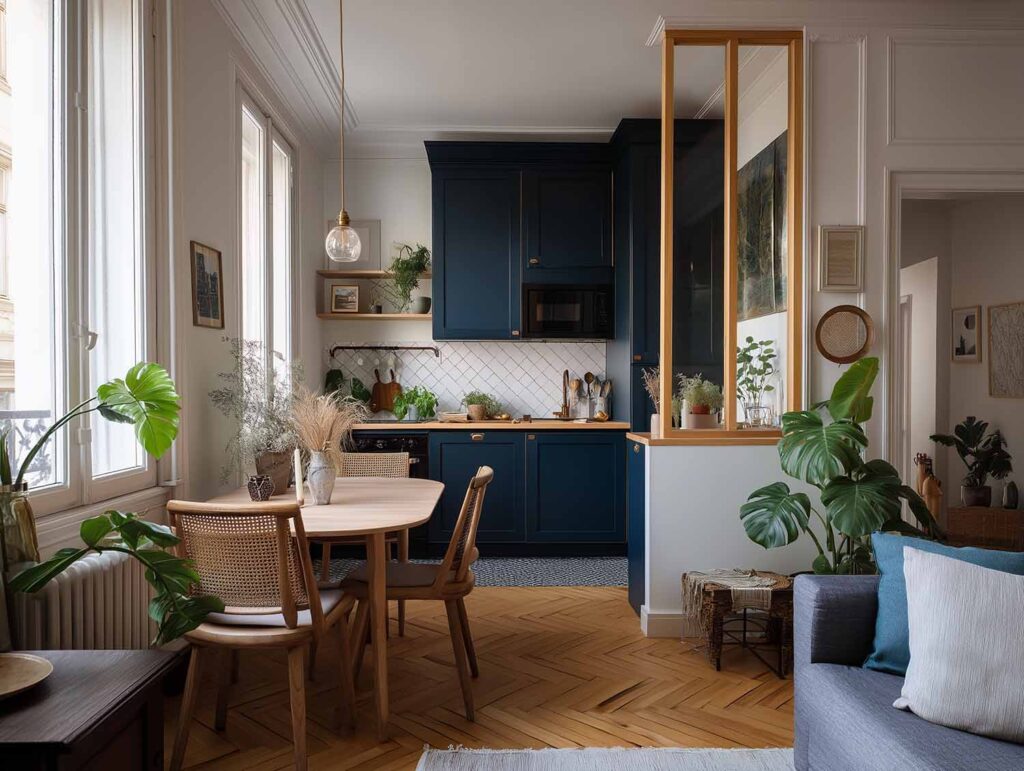
9. Accessories and Decor: Less Is More
In small kitchens, decorations can quickly become overwhelming. It’s better to choose a few well-thought-out pieces in coordinating colors:
- Unique handles made of brass or marble.
- Tableware in shades of blue: Stoneware with color gradients, for example, is very trendy right now.
- Brass tray or gold candlesticks
- Decorative cutting boards made of wood or light-colored natural materials to add warmth
- Plants in light-colored pots with a color gradient
Textiles such as dish towels, seat cushions, or rugs can also incorporate a shade of blue—this visually ties everything together.
It’s the details that make the difference: dishes, cutlery, trays, cutting boards, etc., can be both practical and beautiful! (Advertisement – Clicking on the image will take you to Amazon*):


And why not hang a striking piece of art on the wall that picks up on the shade of blue and complements it with other bold colors? That’s how you bring an artistic aesthetic to your kitchen.
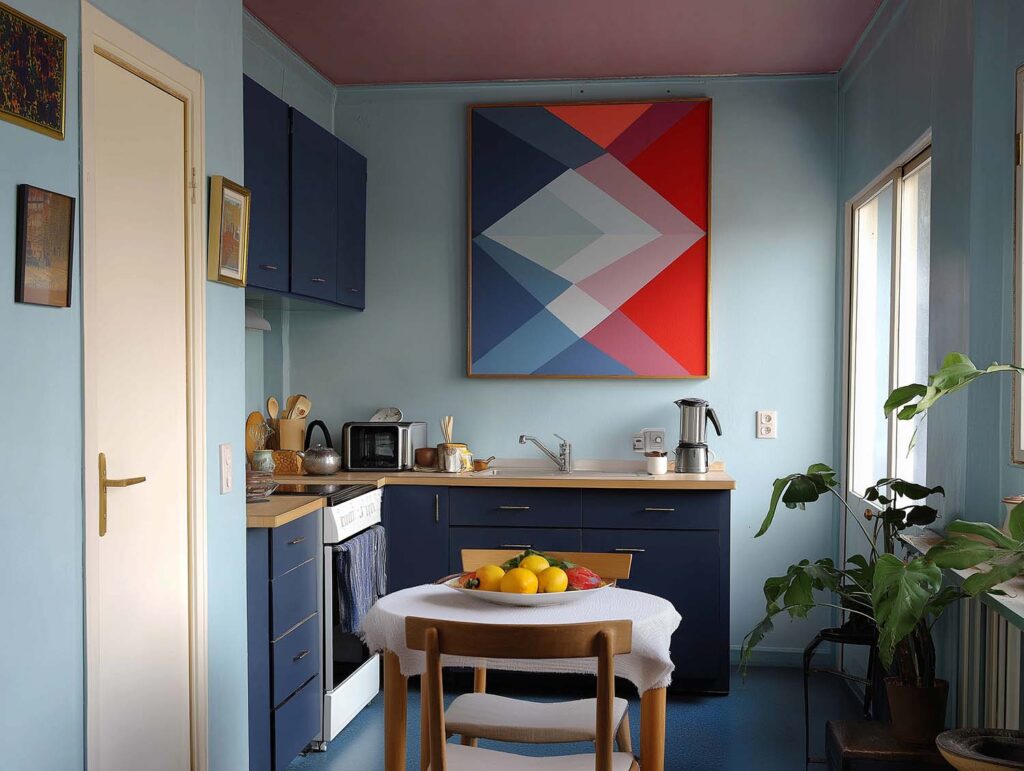
10. Conclusion: It Pays to Be Bold with Color
A small kitchen in dark blue isn’t a contradiction—it’s a statement. Dark blue lends small spaces character, tranquility, and depth. With the right lighting, bright contrasts, and natural materials, you can create a harmonious overall look that’s both elegant and balanced. And with the right accessories, you can create a real “wow” effect.
So don’t be afraid to embrace the darker shades of the color palette: With a few smart design ideas, your small kitchen in dark blue will become the stylish centerpiece of your home.
Are you looking for more tips on decorating your kitchen? If so, you might be interested in this article on decorating small kitchens, for example.
Disclaimer: Several images in this article were created using graphics software such as Midjourney and Photoshop. These are design concepts, which means that the products shown are not available for purchase exactly as pictured. Feel free to get inspired for a DIY project by buying an existing product and customizing and adding to it yourself. Alternatively, a carpenter can design and build such a product for you based on one of the photos.