
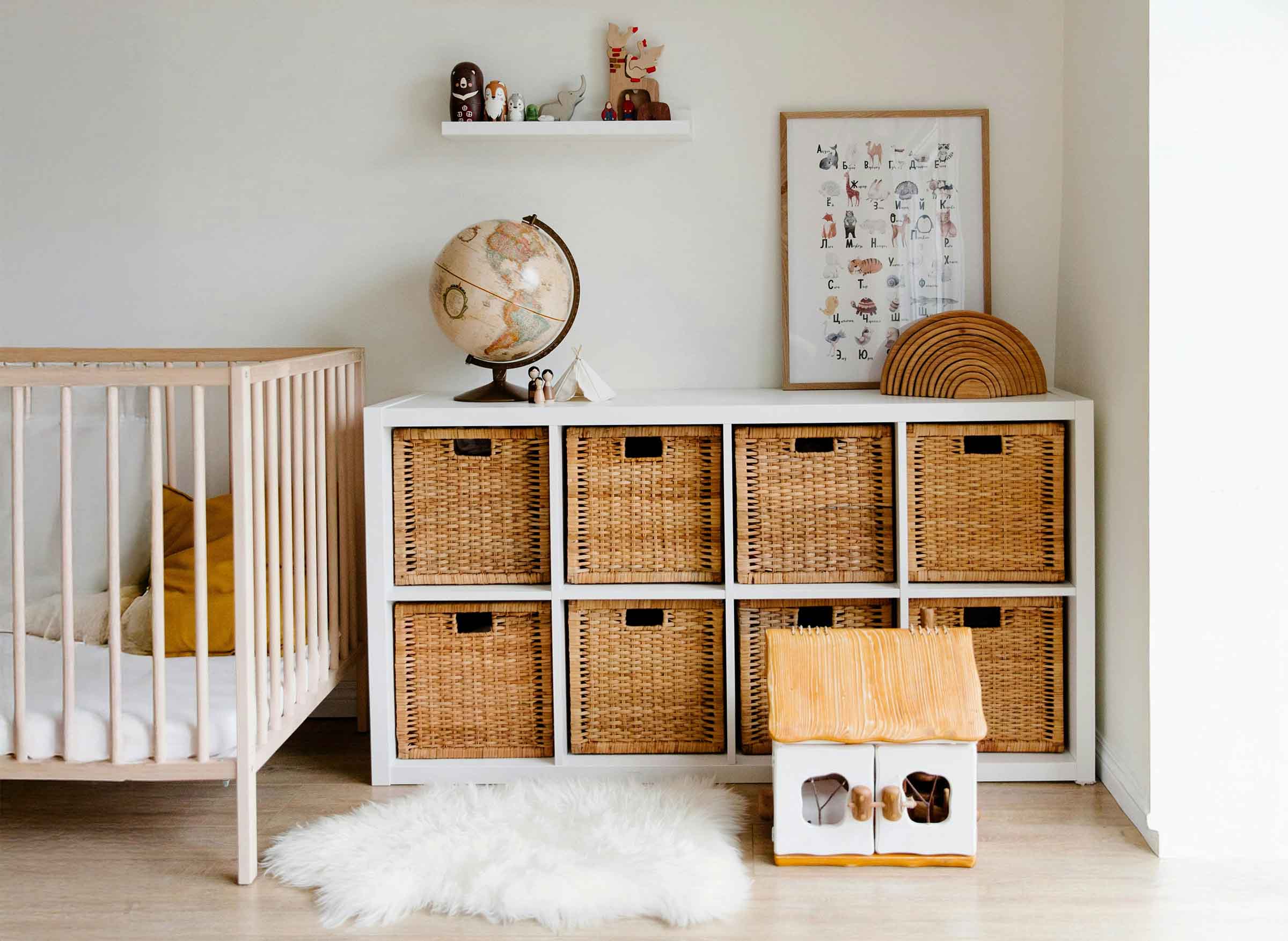
No sooner have you tidied up than the kids’ room looks like a tornado has swept through it again? Welcome to the club! Especially in small apartments, chaos in the kids’ room is a constant issue. Let’s be honest: with kids around, an apartment is never perfectly tidy. Kids love to play and have fun—they take their crayons to bed and their building blocks into the bathtub. But the right storage solutions and a few smart routines can help you restore order to the kids’ room. And maybe your child will even start to enjoy tidying up a little bit. At least every now and then 😉
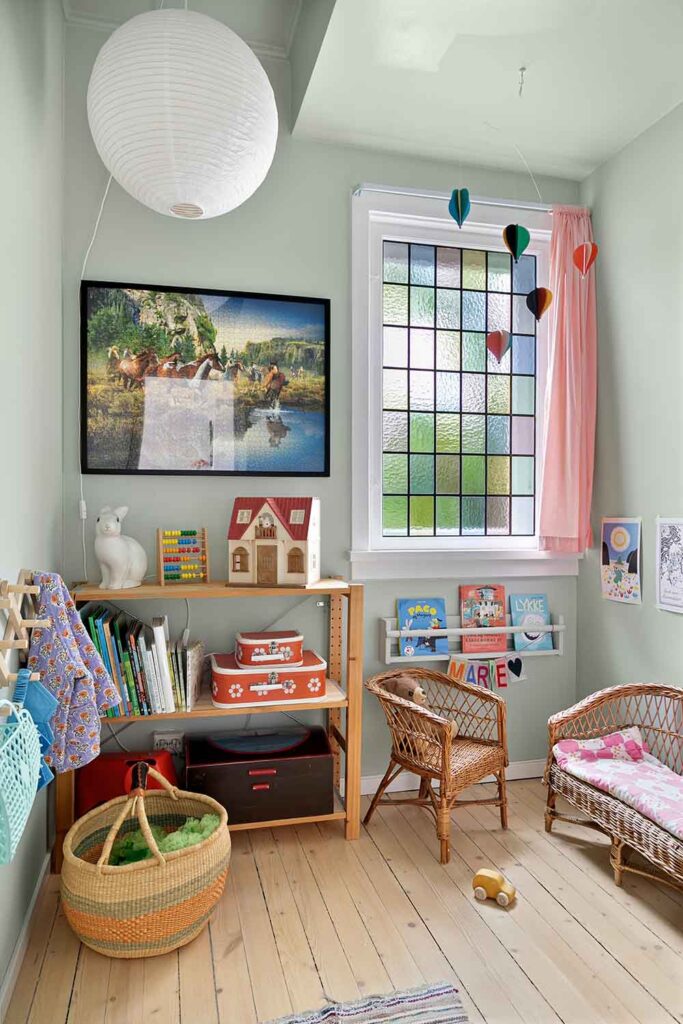
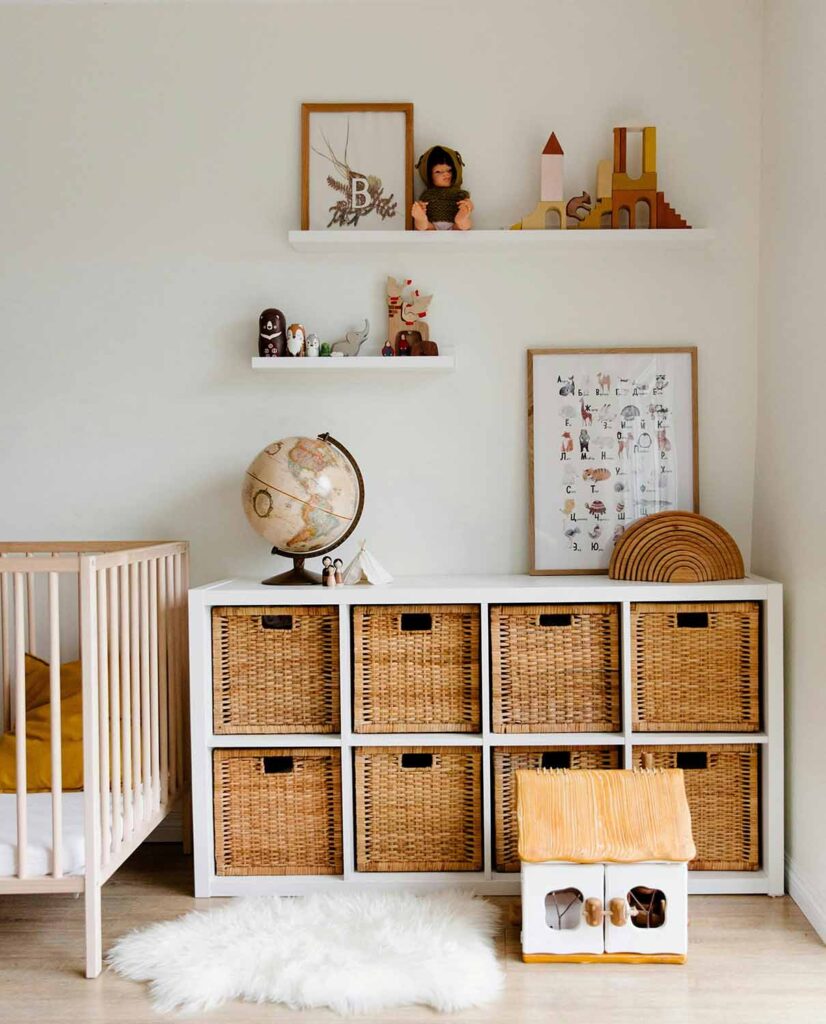
1. Baskets and Boxes: Versatile and Stylish Helpers
Baskets and boxes are the simplest—and at the same time, the most attractive—way to keep a kids’ room organized. Soft fabric boxes are ideal for stuffed animals, while larger boxes with lids are perfect for building blocks, doll accessories, or toy cars. Make sure they aren’t too deep so your child can reach in and put things away on their own.
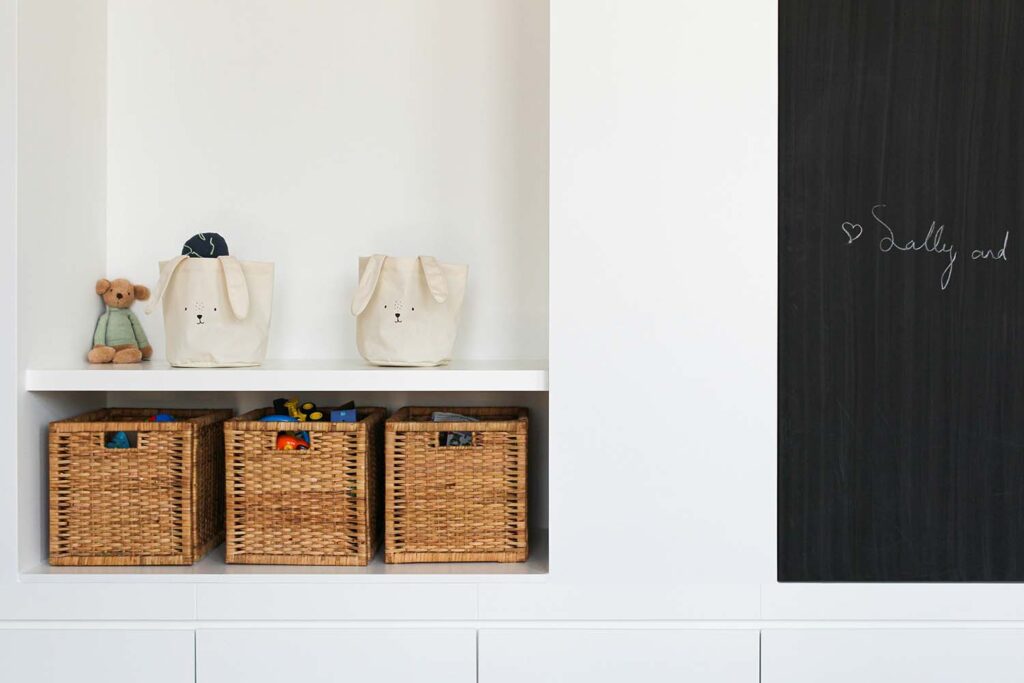
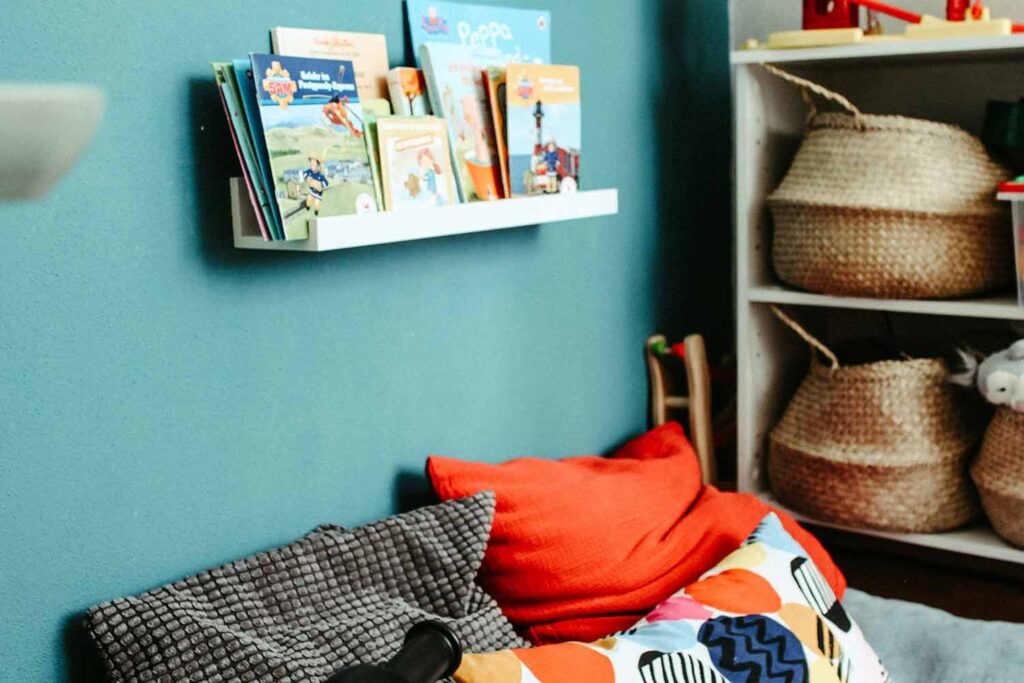
Using consistent colors or materials makes open shelves look more uncluttered, even when they’re packed full. Stackable boxes are especially practical: they can be expanded as needed and rearranged as needed.
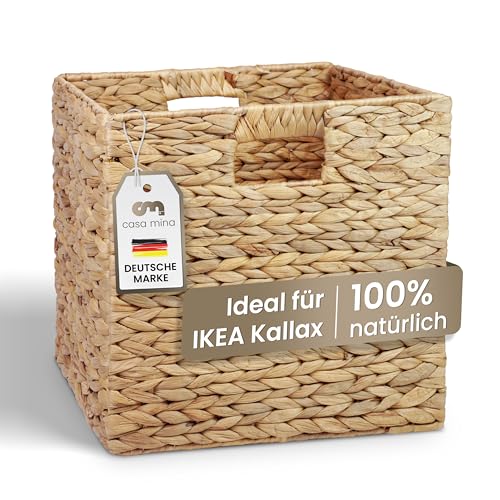
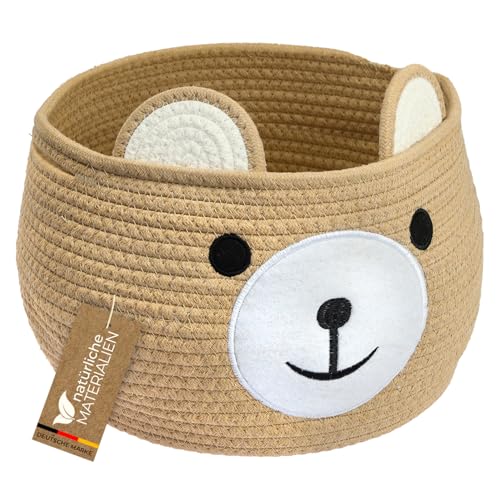
Storage boxes and baskets come in a wide variety of styles. If you want to create a focal point, feel free to choose a box with a design. If you want to fill an entire shelf with boxes and bring a sense of calm to the room, I recommend more neutral styles (Advertisement—Clicking on the respective image will take you to Amazon*):


2. Labels provide guidance
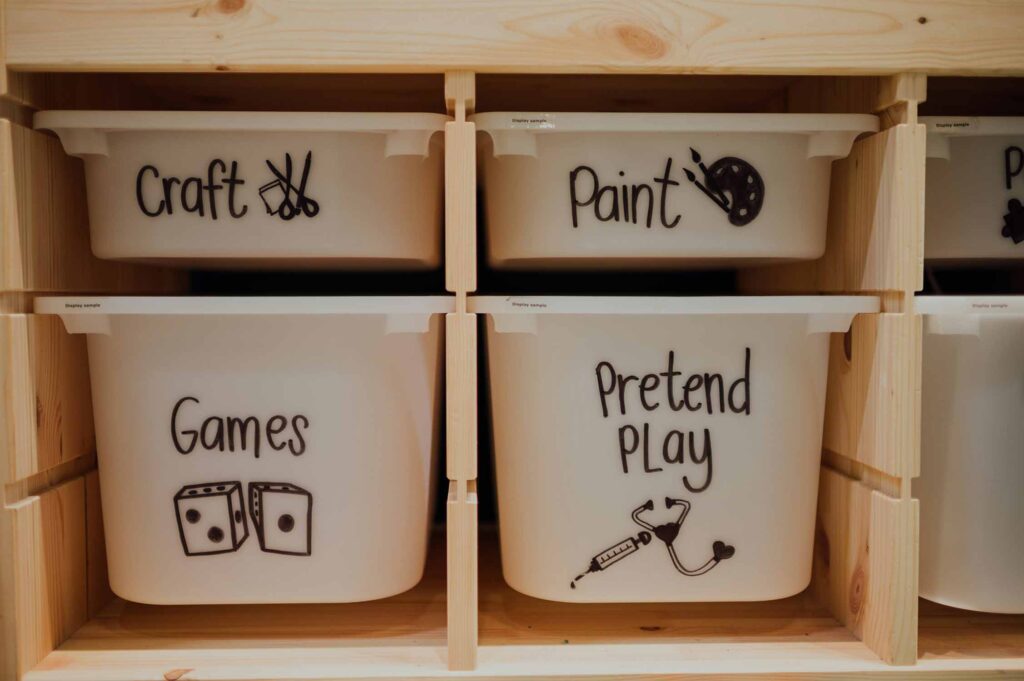
Things will only stay organized if it’s clear where everything belongs. Label boxes and baskets—with words, symbols, or photos, depending on your child’s age. A small picture of cars on one toy box or a symbol for arts and crafts on the next is often enough. This way, your child can clean up on their own because they know where everything belongs.
3. Shelves for Children: Height, Accessibility, and Structure
A well-designed bookshelf brings structure to any kids’ room. Make sure the most important items are within your child’s reach. That way, they can take out and put away books or toys on their own. Open shelves are easy to organize and encourage independence.
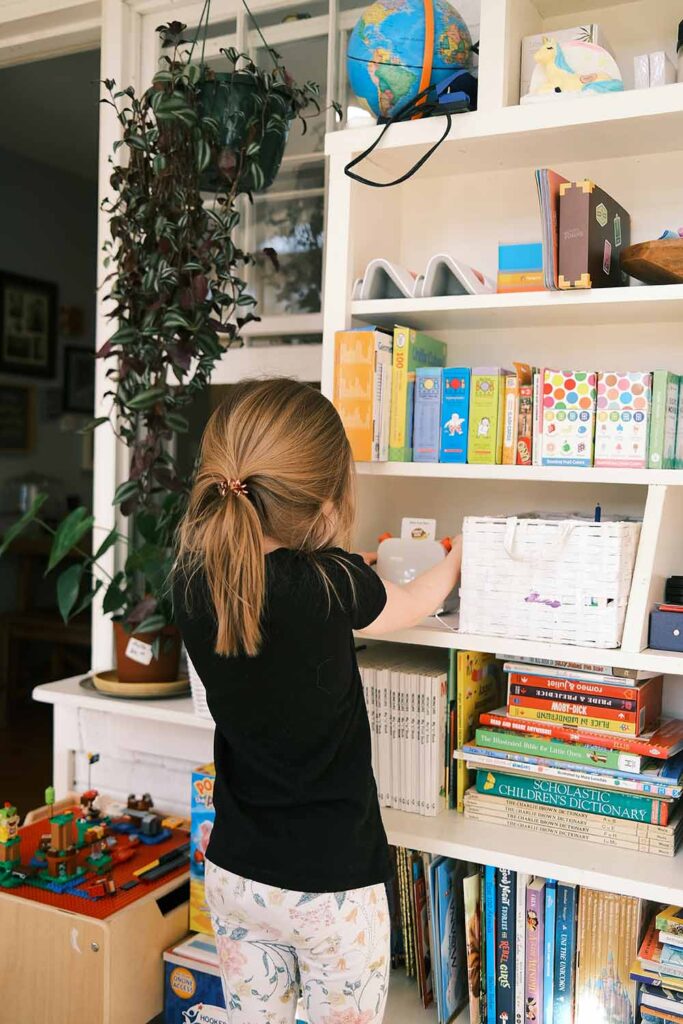
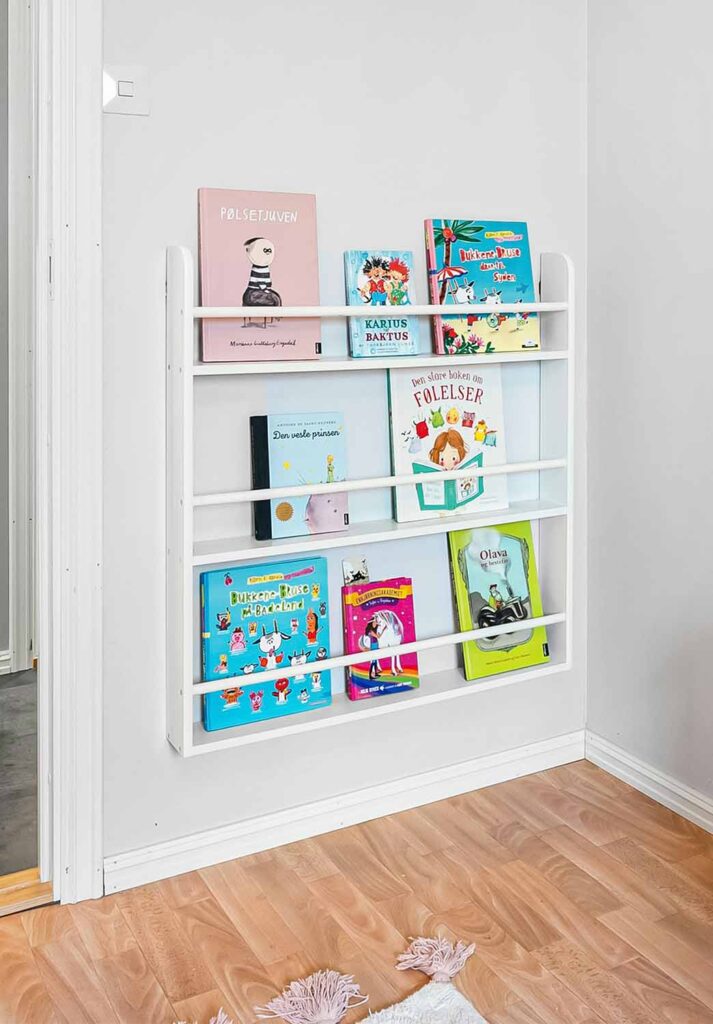
Sort items by category—books, craft supplies, stuffed animals—and secure tall shelves to the wall. You can reserve the top shelves for items you rarely use. In small rooms, it’s worth taking advantage of the room’s height to gain valuable storage space.
Shelves and hanging storage solutions come in a wide variety of styles. Here are a few options to inspire you (Advertisement – Clicking on the image will take you to Amazon*):
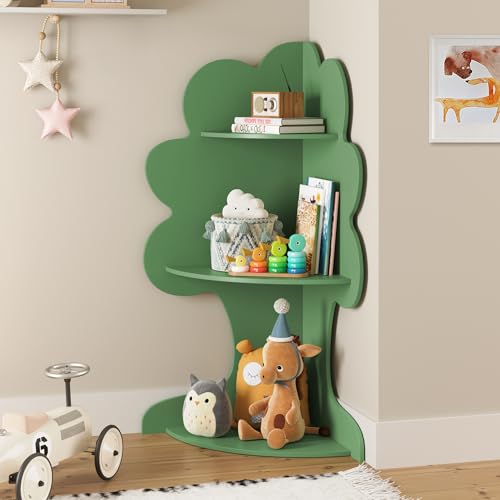


4. Storage benches: A place to sit, a play area, and a hiding spot all in one
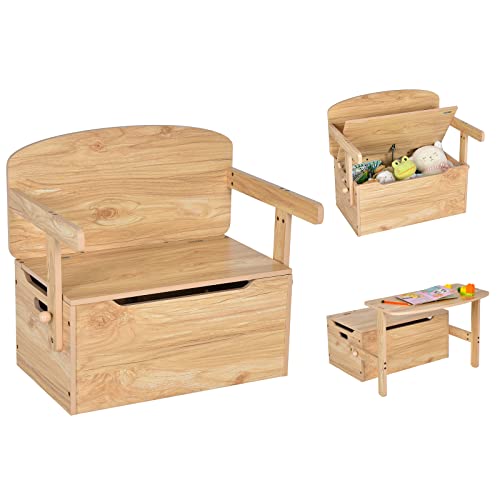
Storage benches are true space-saving wonders, especially in small kids’ rooms. They charmingly combine seating and storage: whether as a cozy reading nook with pillows and a blanket or as a play area where building blocks and dolls are within easy reach. All the things that would otherwise be in the way—books, arts-and-crafts supplies, or favorite games—disappear under the seat.
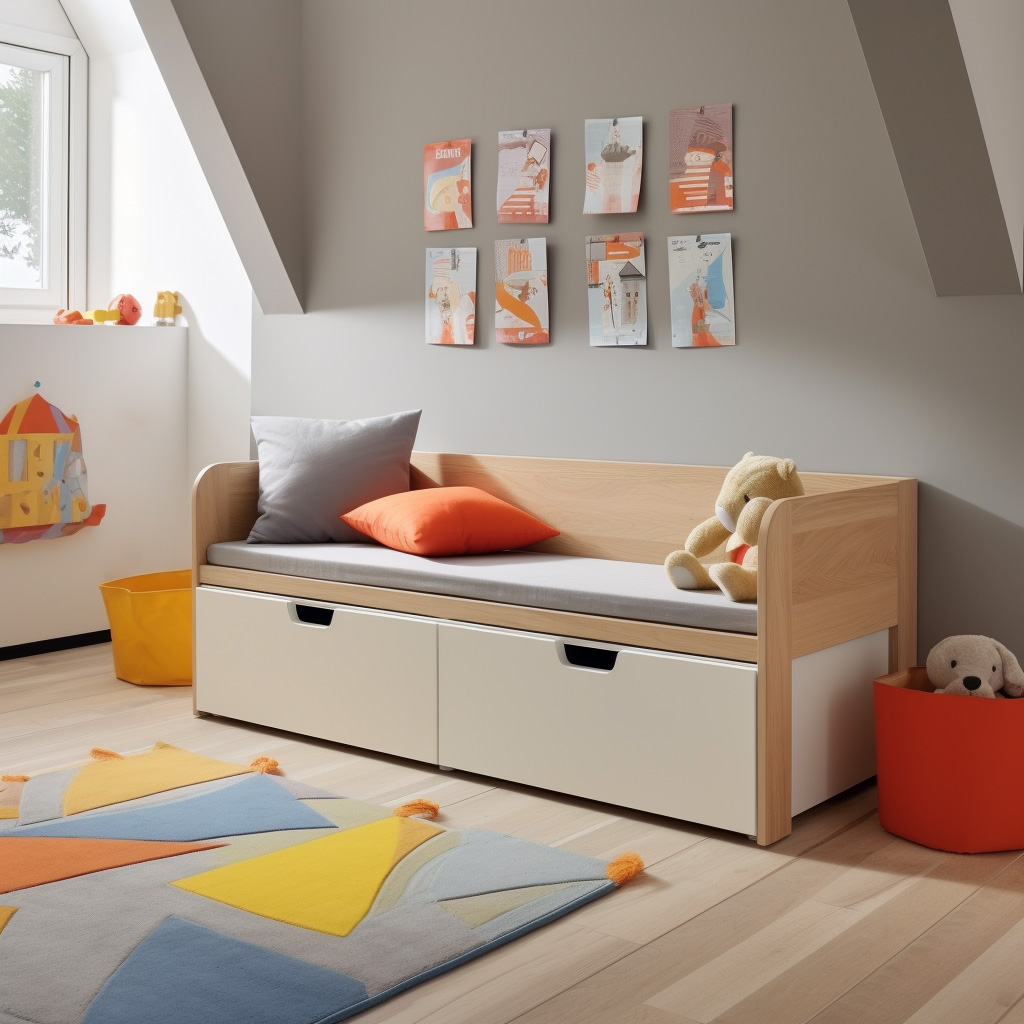
Models with drawers or hinged lids are especially practical, as they let you access everything with a single motion. If you place several benches next to each other, you’ll create a small, modular seating area that also helps keep things organized. This way, even the smallest kids’ room feels structured, yet still cozy and inviting.
A few options for storage benches. I find the 2-in-1 models particularly interesting—they can be folded down to transform into a bench or a table (Advertisement—Clicking on the respective image will take you to Amazon*):



5. Rolling boxes: portable helpers for greater flexibility
Sometimes, a tidy space needs a little movement. And that’s exactly where rolling storage boxes come in. They’re lightweight, mobile, and can be rolled right to wherever you’re building, crafting, or playing. Afterward, they disappear just as quickly under the bed, under a bench, or into a nook.
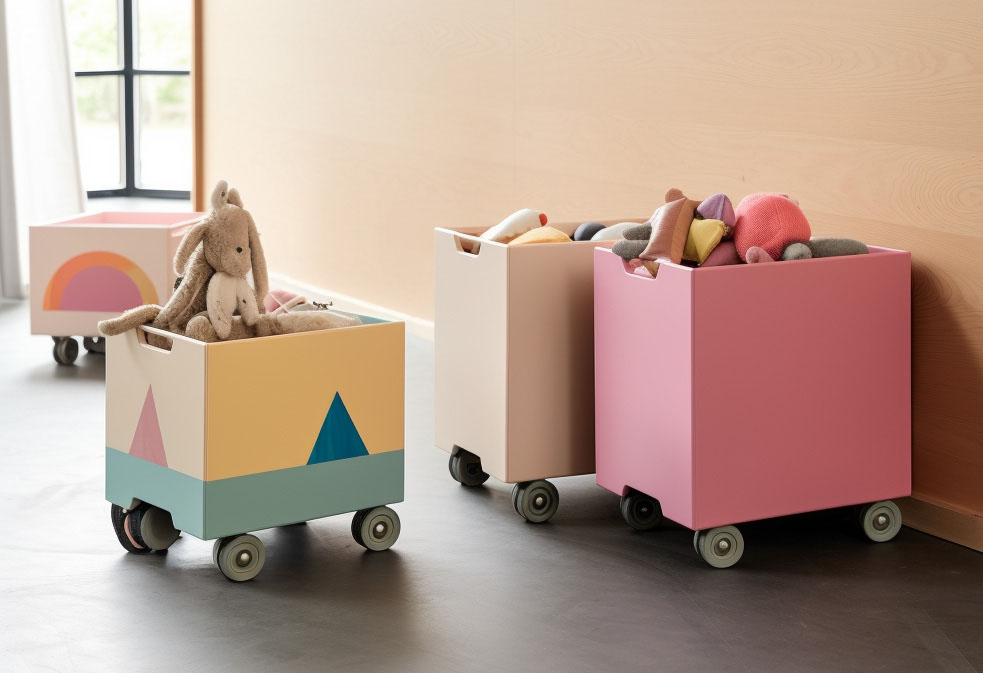
This keeps the floor clear, yet everything is still where it’s needed. Whether it’s building blocks, stuffed animals, or art supplies, rolling storage bins make tidying up almost like play and help children take responsibility for their belongings.
These rolling boxes are both practical and attractive (Advertisement – Clicking on the respective image will take you to Amazon*):


6. Modular wall systems: flexible organization on the wall
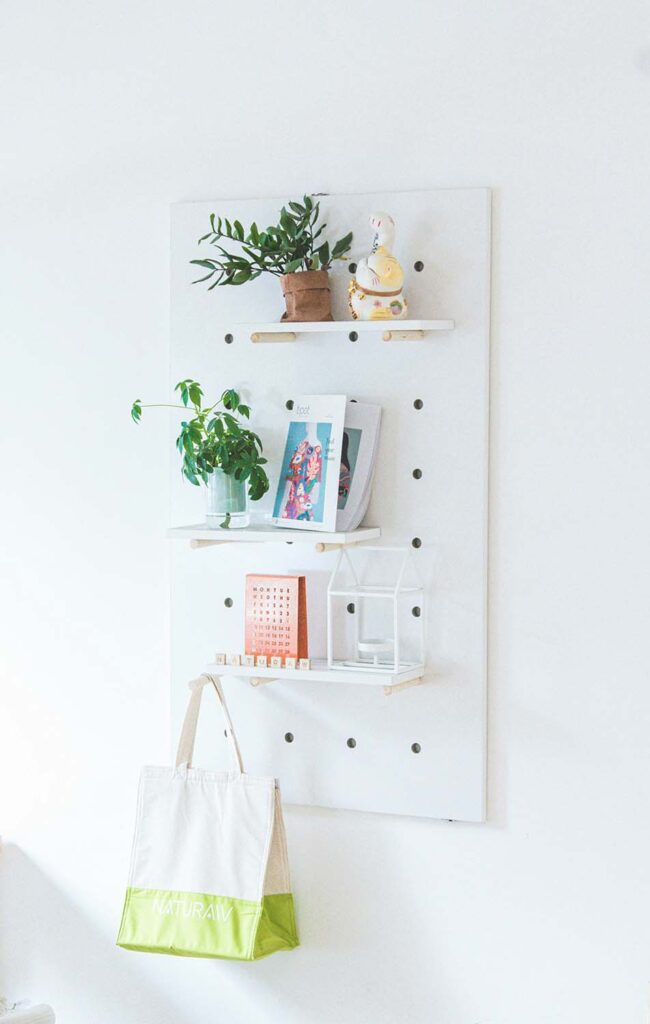
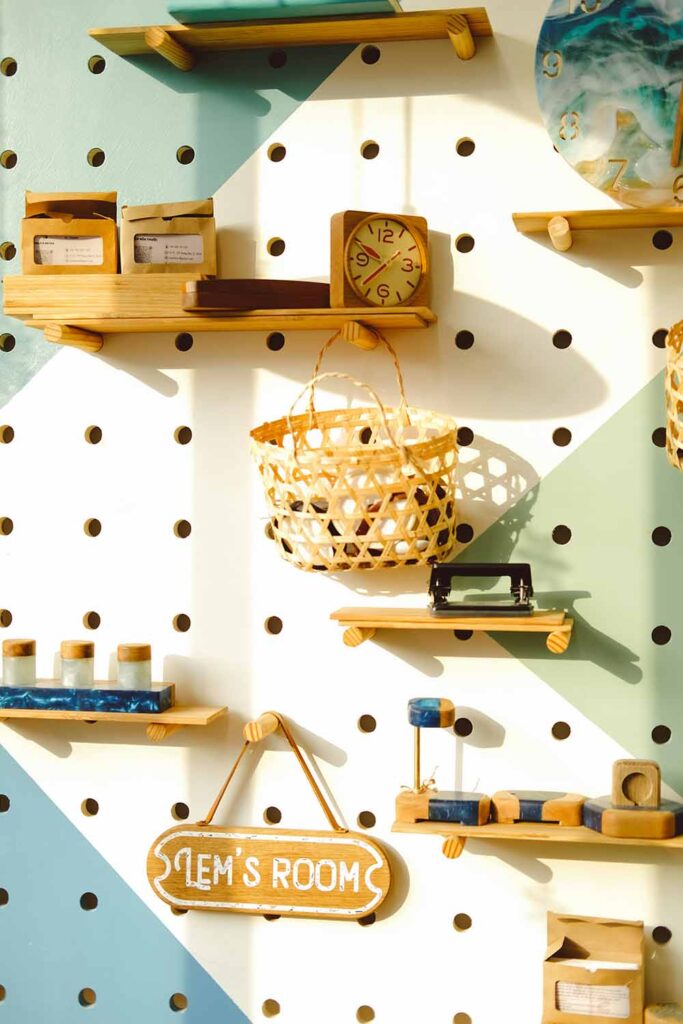
Pegboards are true space-saving wonders. With hooks, small shelves, or baskets, you can neatly store craft supplies, hair clips, or mini figures. If your child’s interests change, the system can be easily reconfigured.
Especially above a desk or in a play area, modular wall units are a space-saving solution that creates structure without cluttering the room. After all, in small rooms, it’s a shame to let wall space go to waste.
7. Child-Friendly Clothing: Encouraging Independence
Clothing also deserves a well-thought-out system. When your child can reach their own things, it promotes both independence and organization in the kids’ room. A low clothes rod, open shelves, or labeled baskets make getting dressed in the morning much more relaxed.
Organize clothes by season or occasion so your child can easily find what they need. In very small rooms, modular systems or open mini-closets offer a flexible alternative that grows with your child and can be rearranged as needed.
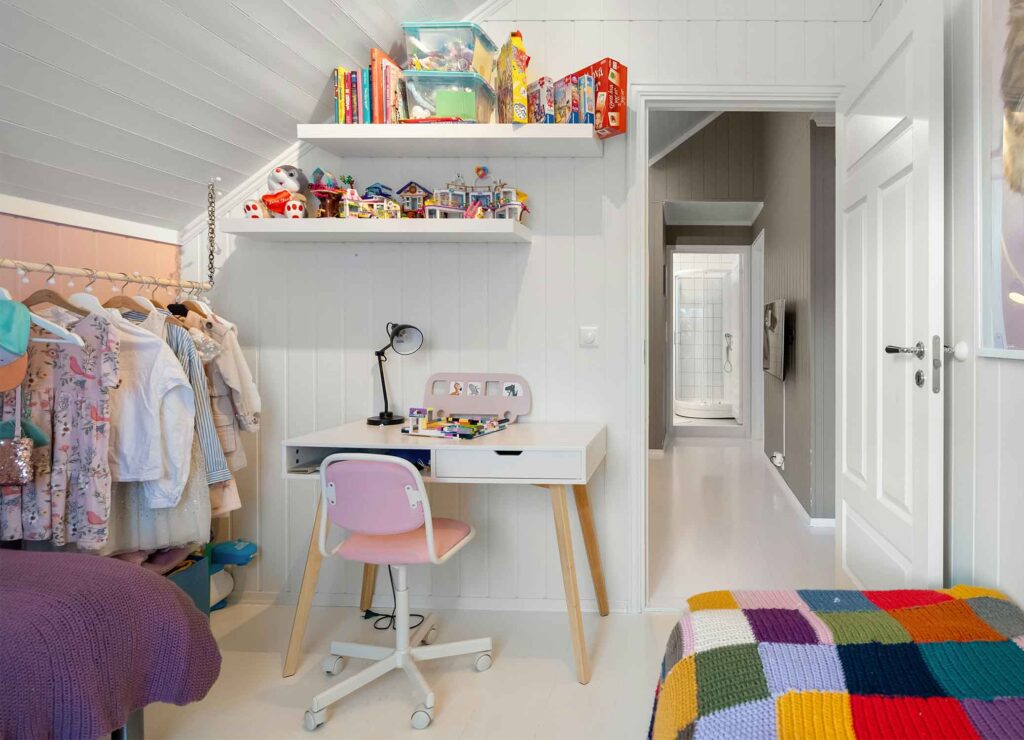
8. Hidden Storage Space: Space-Saving Solutions for Small Corners
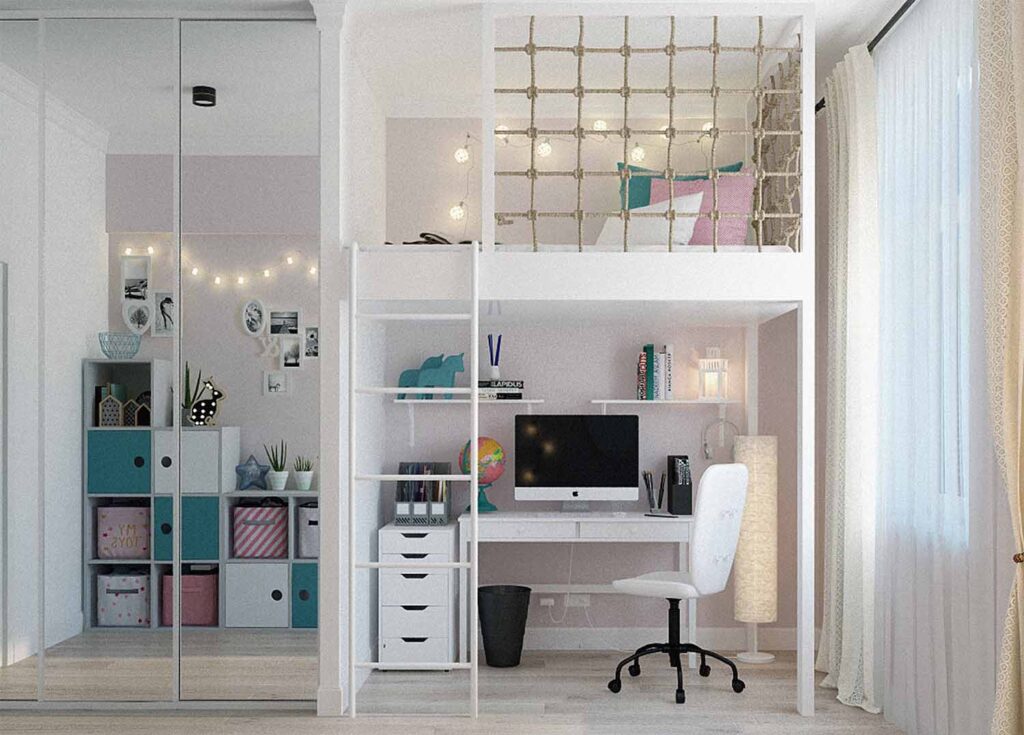
In small kids’ rooms, every square centimeter counts. There’s often valuable storage space hidden under the bed—perfect for bedding, seasonal clothing, or rarely used toys. Rolling storage bins with handles or beds with built-in drawers are practical solutions.
You can also create extra storage space above the door, under benches, or behind curtains. These “hidden nooks” help keep the kids’ room tidy and airy, even with limited space.
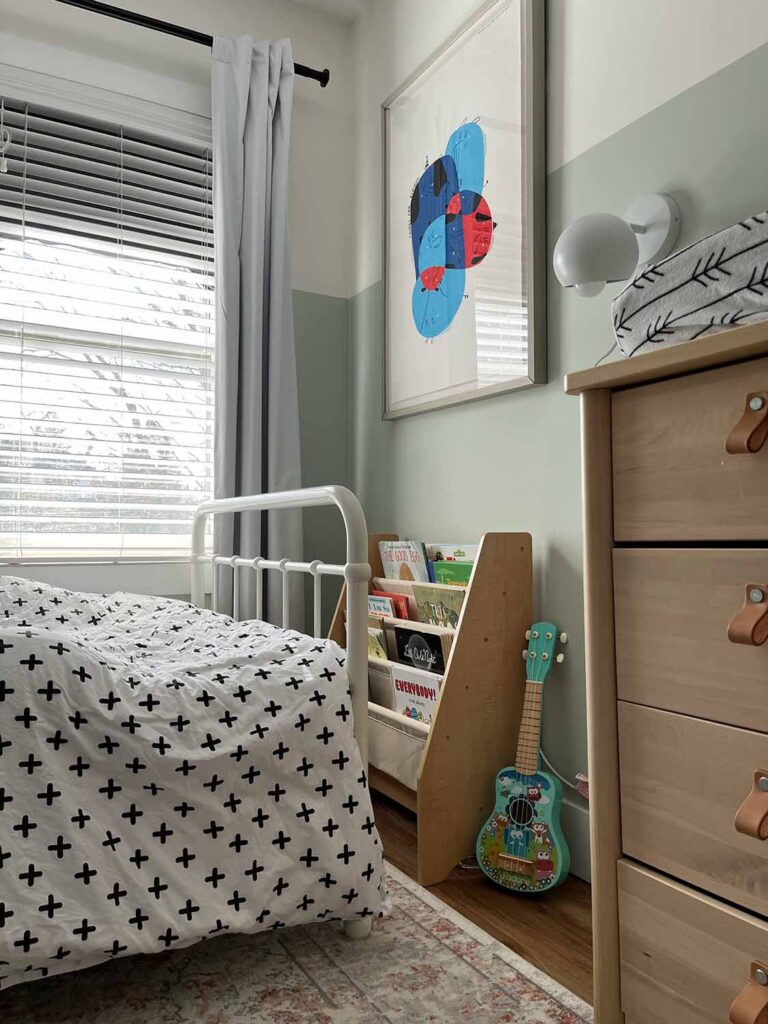
9. Clearly Defined Areas in the Room
Even small kids’ rooms benefit from a clear layout. Plan a separate area for each activity: sleeping, playing, and drawing. It sounds simple, but it brings a sense of calm to the room. A rug or a colored wall can visually separate the zones and help everyone—including children—find their way around.
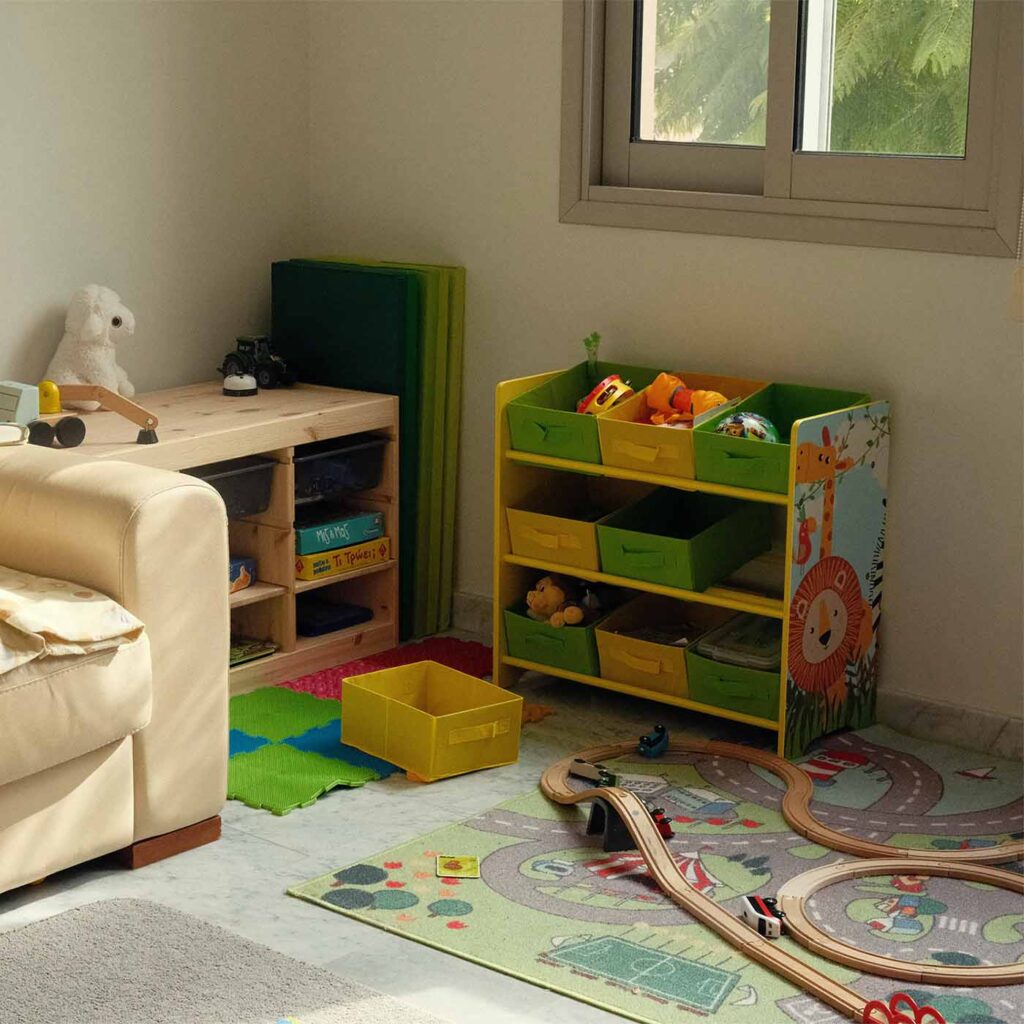
10. Less is more
Especially in small rooms, fewer toys are often better. Too many things can overwhelm children and make it harder to clean up. Sort through the room regularly with your child and get rid of toys that are no longer being used. A “rotation box” is a great idea: Put some of the toys in storage and swap them out after a few weeks. This adds variety, creates surprises, and frees up more space.
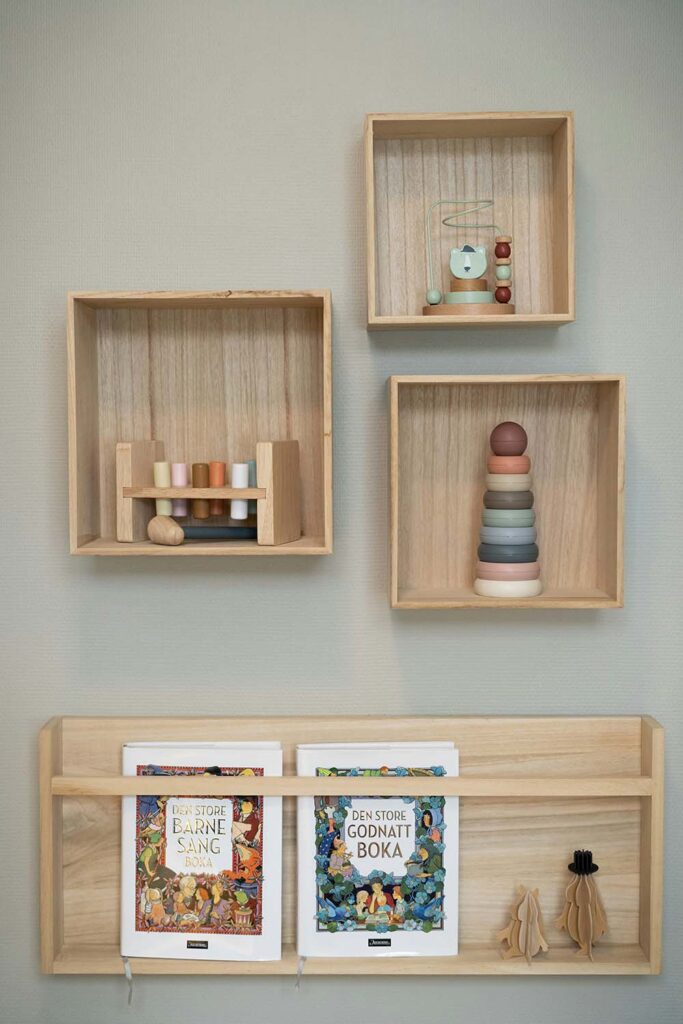
11. Routines Instead of Constant Cleaning
Keeping a kids’ room tidy has little to do with perfection, but a lot to do with habit. Introduce small rituals that fit into your daily routine: tidy up together right before dinner, or spend half an hour sorting things out on the weekend. Children love routines, and when tidying up is part of them, it becomes second nature. A little competition helps: Who can collect all the red building blocks first?
12. Organization That’s Fun
Last but not least: Tidying up can be fun! Let your child help decide where each toy belongs. If they’ve chosen or decorated the storage boxes themselves, they’ll feel much more connected to the system and will be more likely to stick to it.
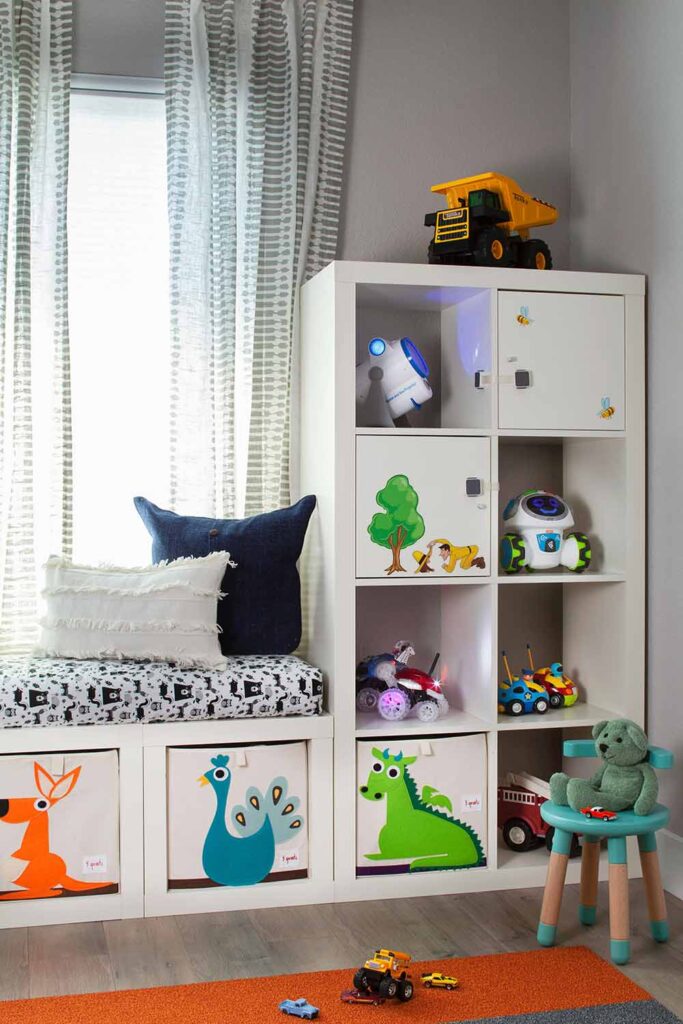
Some kids love boxes with designs on them (Advertisement – Clicking on the respective image will take you to Amazon*):


Conclusion
Let’s be honest: it will never be perfectly tidy. But I hope this article has given you some useful tips on how to tackle kids’ room clean-up more calmly — with clear systems, consistent routines, and solutions that work for children. And maybe even get your child excited about joining in. Good luck with the tidying up!
Are you looking for more tips for a small kids’ room? Then feel free to browse the Small Kids’ Room category.
Disclaimer: Some of the images in this article were created using graphic design software such as Midjourney and Photoshop. These are design concepts, which means the products shown are not available for purchase exactly as depicted. Feel free to use this as inspiration for a DIY project by purchasing an existing product and customizing or adding to it yourself. Alternatively, a carpenter can design and build such a product for you based on one of the photos.